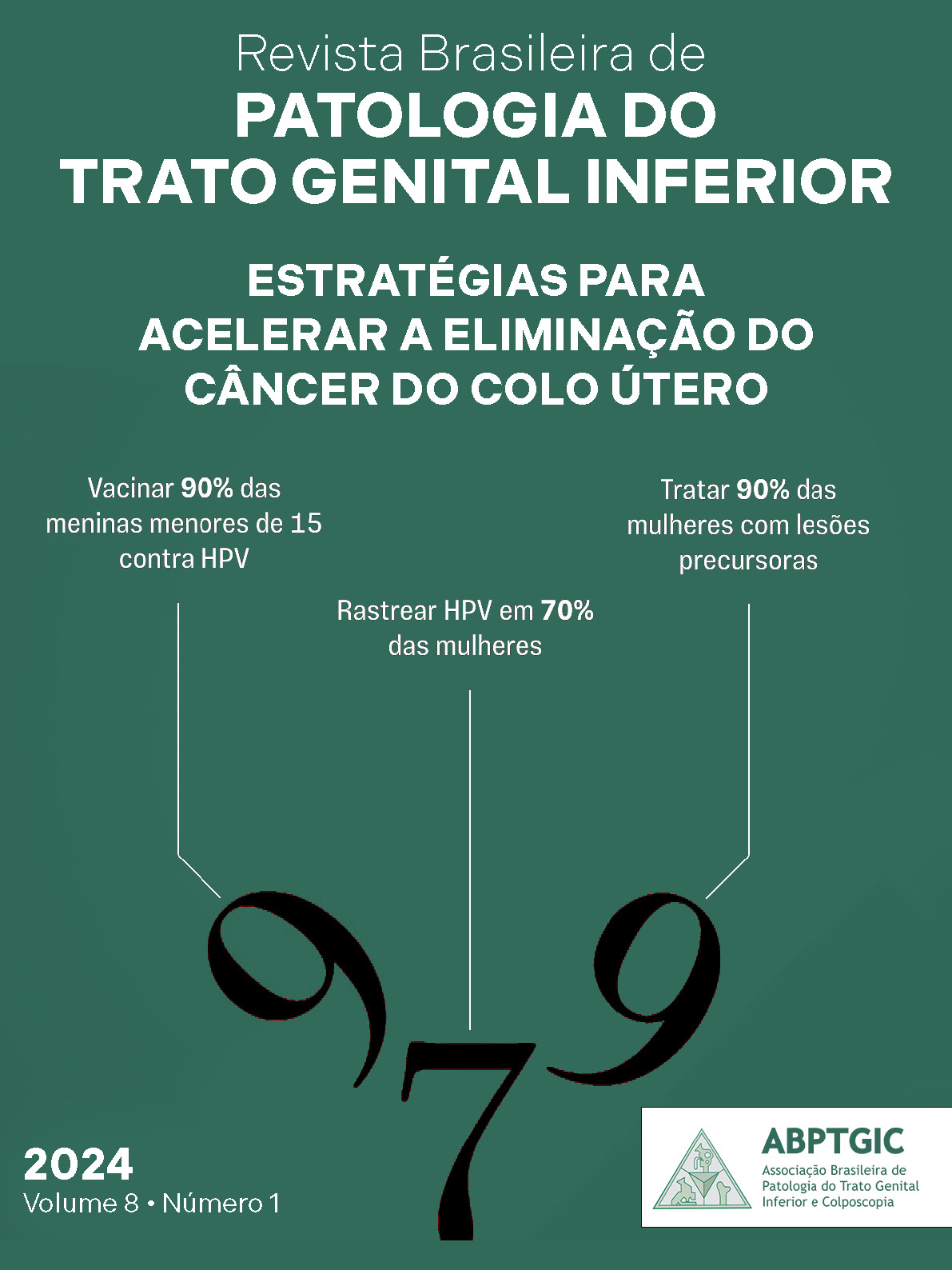
Implementation of the HPV test in the Unified Health System
DOI:
https://doi.org/10.5327/2237-4574-2024810016Keywords:
cervical cancer, Papillomavirus infections, early detection of cancer, Papanicolaou test, HPV DNA testAbstract
Cervical cancer is recognized as a condition that can be eliminated, and the mortality associated with this disease in Brazil is inconsistent with the number of screening cytologies recorded by the Unified Health System (SUS). The theoretical coverage, ranging by 80–90%, does not exceed 30%, resulting in significant waste, without clear knowledge of who is not being screened. In light of this reality, researchers from the State University of Campinas (Unicamp) began producing evidence to support the modernization of the SUS program. In 2017, a demonstration and cost-effectiveness study was implemented, evaluating the transition from opportunistic cytological screening to the use of the human papillomavirus — HPV DNA test in an organized program. The program, now in its seventh year of activity, is conducted in the SUS of the city of Indaiatuba (SP). The results compiled after 30 months were impactful and were published in 2021. These results initiated discussions that led to the 2024 milestone: the approval of the use of the HPV test in the national screening program. The HPV test alone is not sufficient. The success achieved depends on an efficient system of registration and population control, capable of identifying and summoning women who have not undergone the exam, as well as on avoiding waste.
References
Teixeira JC, Vale DB, Bragança JF, Campos CS, Discacciati MG, Zeferino LC. Cervical cancer screening program based on primary DNA-HPV testing in a Brazilian city: a cost-effectiveness study protocol. BMC Public Health. 2020;20(1):576. https://doi.org/10.1186/s12889-020-08688-4
Teixeira JC, Vale DB, Campos CS, Bragança JF, Discacciati MG, Zeferino LC. Organization of cervical cancer screening with DNA-HPV testing impact on early-stage cancer detection: a population-based demonstration study in a Brazilian city. Lancet Reg Health Am. 2021;5:100084. https://doi.org/10.1016/j.lana.2021.100084
Teixeira JC, Vale DB, Discacciati MG, Campos CS, Bragança JF, Zeferino LC. Cervical cancer screening with DNA-HPV testing and precancerous lesions detection: a brazilian population-based demonstration study. Rev Bras Ginecol Obstet. 2023;45(1):21-30. https://doi.org/10.1055/S-0043-1763493
Brasil. Ministério da Saúde. Secretaria de Ciência, Tecnologia e Inovação e do Complexo Econômico-Industrial da Saúde. Portaria SECTICS/MS nº 3, de 7 de março de 2024. Relatório para a sociedade com decisão final nº 441. Testagem molecular para detecção de HPV e para rastreamento do câncer do colo do útero. [Internet]. Brasília: Diário Oficial da União, 8 de março de 2024 [acessado em 10 maio 2024]. Disponível em: https://www.gov.br/conitec/pt-br/midias/relatorios/2024/sociedade/20240803_ReSoc_441_testagem_molecular_HPV1.pdf/view
Vale DB, Silva MT, Discacciati MG, Polegatto I, Teixeira JC, Zeferino LC. Is the HPV-test more cost-effective than cytology in cervical cancer screening? An economic analysis from a middle-income country. PLoS One. 2021;16(5):e0251688. https://doi.org/10.1371/journal.pone.0251688