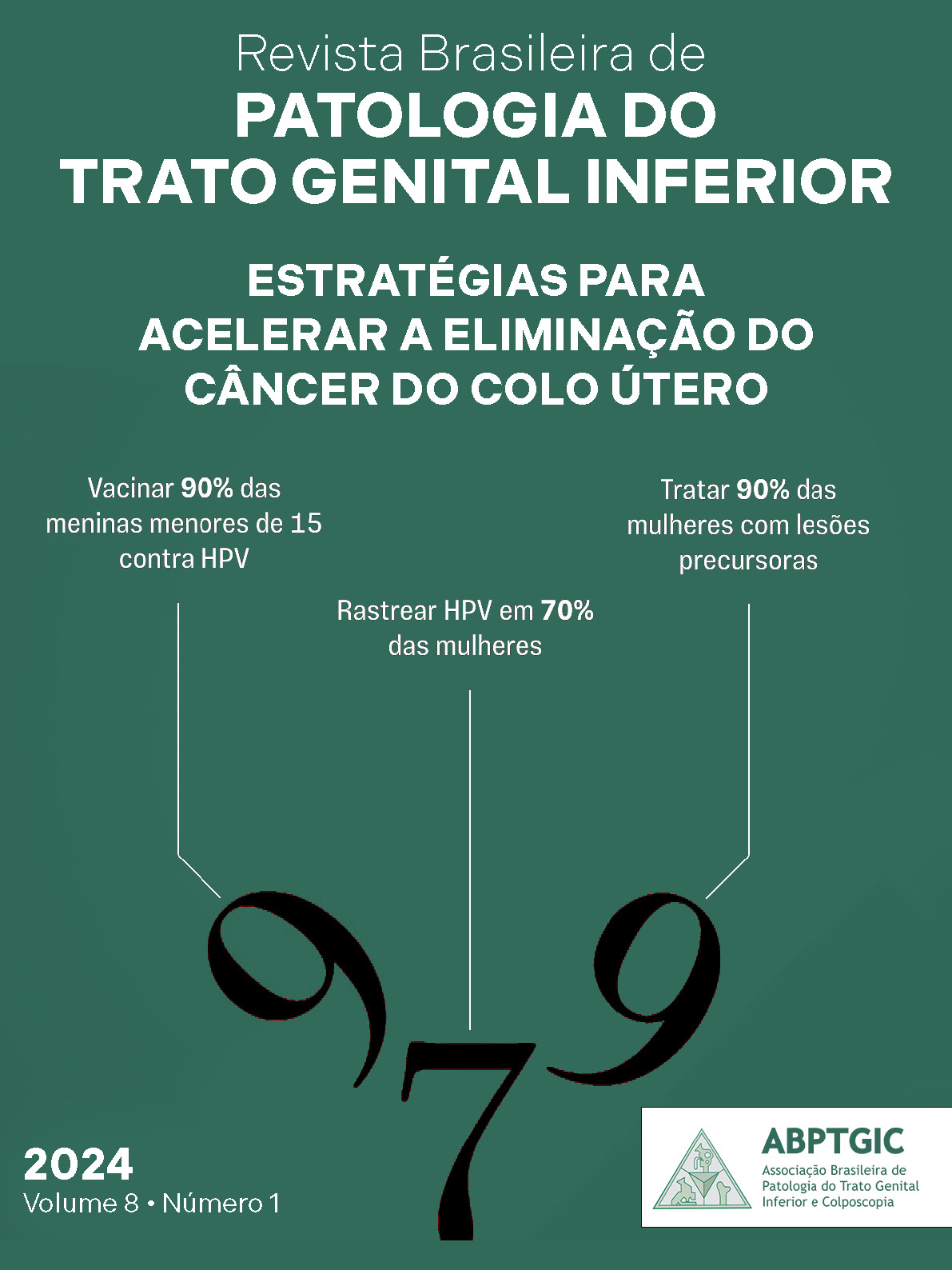
Recommendations of the ABPTGIC for the use of HPV vaccines in Brazil
DOI:
https://doi.org/10.5327/2237-4574-2024810018Keywords:
HPV, vaccines, cancerAbstract
The recent decision by Brazil's National Immunization Program (PNI) to adopt a single-dose schedule for HPV vaccination has raised many questions. In response, the Brazilian Association of Lower Genital Tract Pathology and Colposcopy (ABPTGIC) clarifies the current vaccination schemes. The PNI chose a single dose of the quadrivalent HPV vaccine (HPV4) for children and adolescents aged 9 to 14, with a temporary catch-up strategy for unvaccinated adolescents aged 15 to 19, which the ABPTGIC strongly supports. This strategy, backed by robust evidence, aims to increase vaccine coverage, especially where the incorporation of a second dose is a challenge. Countries using the single-dose model have seen increased vaccine coverage and extended benefits to priority groups like sexual violence victims and recurrent respiratory papillomatosis (PRR) cases. Immunocompromised patients and those over 20 years should still receive three doses. The latter recommendations aim to broaden vaccine access and reduce HPV prevalence, contributing to the elimination of cervical cancer in Brazil. However, there is still a lack of robust data on single-dose protection against HPV-related diseases in other organs, long-term antibody persistence, and effectiveness in older age groups. For individual protection, ABPTGIC recommends using the nonavalent HPV vaccine: two doses for ages 9 to 14 and three doses for ages 15 to 45. For immunocompromised patients aged 9 to 45, three doses are advised. Alternatively, two doses for 15 to 20 years could be used. This
recommendation will stand until new evidence suggests a safe and effective reduction in doses.
References
Bencina G, Oliver E, Meiwald A, Hughes R, Morais E, Weston G, et al. Global burden and economic impact of vaceine-preventable cancer mortality. J Med Econ. 202427 (supl 2):9-19. https://doi.org/10.1080/13696998.2024 2350877
Gonzalez-Rodriguez JC, Cruz-Valdez A, Madrid-Marina V. Cervical cancer prevention by vaccination: review. Front Oncol. 2024:14:1386167. https:/doi.org/10.3389/fonc.2024.1386167
Wendland EM. Kops NL, Bessel M, Comerlato J, Maranhdo AGK. Souza FMA, et al. Effectiveness of a universal vaccination program with an HPV quadrivalent vaccine in young Brazilian women. Vaccine. 2021:39(13):1840-5. https://doi.org/10.1016/j vaccine. 2021.02.040
Instituto Nacional de Câncer José Alencar Gomes da Silva. Estimativa 2023: incidência do Câncer no Brasil. Rio de Janeiro: INCA; 2023.